

Family storY
Co-parenting: One child, two parents and life getting in the way
Single motherhood
Separate flats
1
There are things that don’t happen suddenly. Even if that’s exactly how it feels later on. The shock came in the middle of a long process. Not at the beginning. But looking back from there, everything suddenly started anew. The apartment door slammed shut. Just moments before, we’d been lying together in the bathtub. Then there was nothing but fog. And the feeling that something was finally over. A seven-year relationship. And at the same time, a desire to have children that had long since grown bigger than the idea of a romantic relationship between two people. Back then, I realized for the first time that these two things might not necessarily belong together. Partnership and family. Love and parenthood. Maybe you could separate them.
The desire to have a child
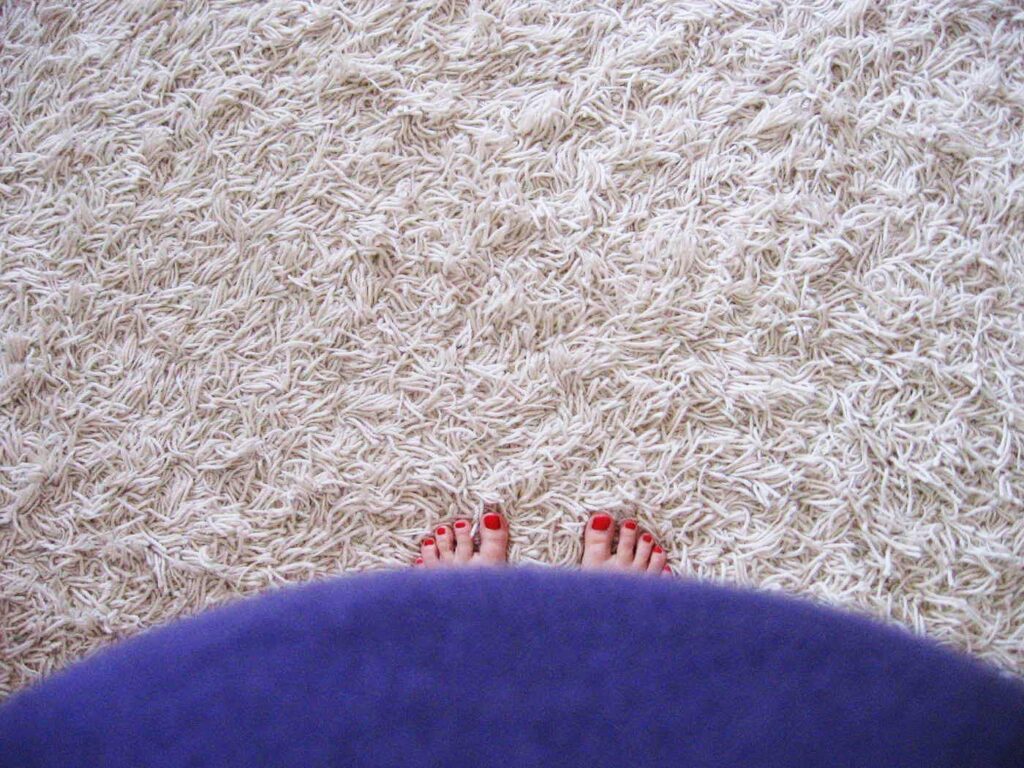
The desire didn’t come on gradually. It was there all of a sudden. Not as an abstract thought, but physically. Urgent. Loud. I wanted a child. My partner at the time wanted that too. So we started thinking about how it might work.
It quickly became clear to us: we didn’t want an anonymous sperm donor. We wanted a father. A person. Someone who would take responsibility. Someone who understood family as more than just a biological connection.
We couldn’t find anyone in our circle of friends who felt right for the role. Many men were already part of traditional family setups or wanted to live that way at some point. We were afraid that our child would always remain a bit of a ‘second family’ in that context. So we kept looking.
Online, we mainly found platforms that felt like dimly lit classified ad markets for reproduction. Hair colour. Height. Educational qualifications. Blurry photos. Lots of longing. Little humanity. We visited fertility support groups. Met men. Had conversations that sometimes felt like dates and sometimes like job interviews for a future life. There was the charming man who never replied after the first meeting. The thoughtful man with whom the chemistry just wasn’t right. The attractive man who was simultaneously casting for other potential family models. And then there was Gianni.
What develops between people
With Gianni, something different began. Not romantic. Not dramatic. Not a great love in the traditional sense. More like a slow-growing sense of trust. We went out for meals, sent messages, met up with friends, talked about art, politics, family, fears, the future, music, bringing up children, and how we wanted to live our lives. Something developed that was hard to put into words. Not a relationship. But not just an ordinary friendship either. Perhaps a form of platonic love. Perhaps simply a deep bond. At some point, it became clear: we wanted to become parents together.
At the computer at night
Whilst we were trying to work out how to rethink the concept of family, another idea took shape at the same time. A platform for people like us. Because everywhere we went, we were faced with the same questions:
- How do you find people for alternative family models?
- How do you talk about it?
- Where can you discuss these issues?
- Where does family actually begin?
So there we were, sitting in front of our screens late at night. Amidst teacups, cigarette packets, privacy policies and sketches, Familyship slowly took shape. Our first flyers featured old family photos turned upside down. Above them read: “Looking for a family?”
Four weeks later, the platform went live. The first user logged in exactly once. We were incredibly proud all the same.

Moscow
A few months later, I flew to Moscow. January. Snow. Too many layers of clothing. No idea how to use the Cyrillic ticket machines. Gianni was working there at the time. And we both knew why I’d actually come. We tried to pretend we were just ordinary tourists, though.
We walked along snow-covered streets. Shared gloves. Drank wine in restaurants with goldfish on the windowsill. Smoked in the snow at night. Talked about the future and responsibility and why we’d chosen each other. Not as a couple. But as a family.
Later, we stood outside the hotel and asked for vodka at reception. The hotel was alcohol-free. So we went upstairs. The night was short. The next morning, we were tired. And at some point, just before our return flight, I was sitting at the airport, resting a hand on my stomach, and suddenly knew: it had worked.
We’re going to be parents
At first, the pregnancy test only looked positive in the right light. Then suddenly it was unmistakable. I ran around my flat. Music blaring. Completely overwhelmed. Joy. Fear. Euphoria. We’re going to be parents. Holy shit.
The pregnancy itself was less romantic than expected. Lots of nausea. Lots of everyday life. Lots of train journeys between Germany and Italy. Ultrasound appointments. Discussions about names.
And at some point it became clear: it’s going to be a girl. Milla.
Eight weeks early
My waters broke eight weeks before my due date. Suddenly, hospital. Antibiotics. Lung-maturation injections. No getting up. Just hoping. Five days later, Milla was here. Very small. Very alert. Very real. I remember the neonatal unit. Beeping machines. Glass incubators. Blue lights. And that tiny human with black hair, who seemed both fragile and completely whole at the same time.
I sat in front of that incubator and immediately felt the need to protect this little being. Not perfectly. Not ideally. Just unconditionally.
Family without a template
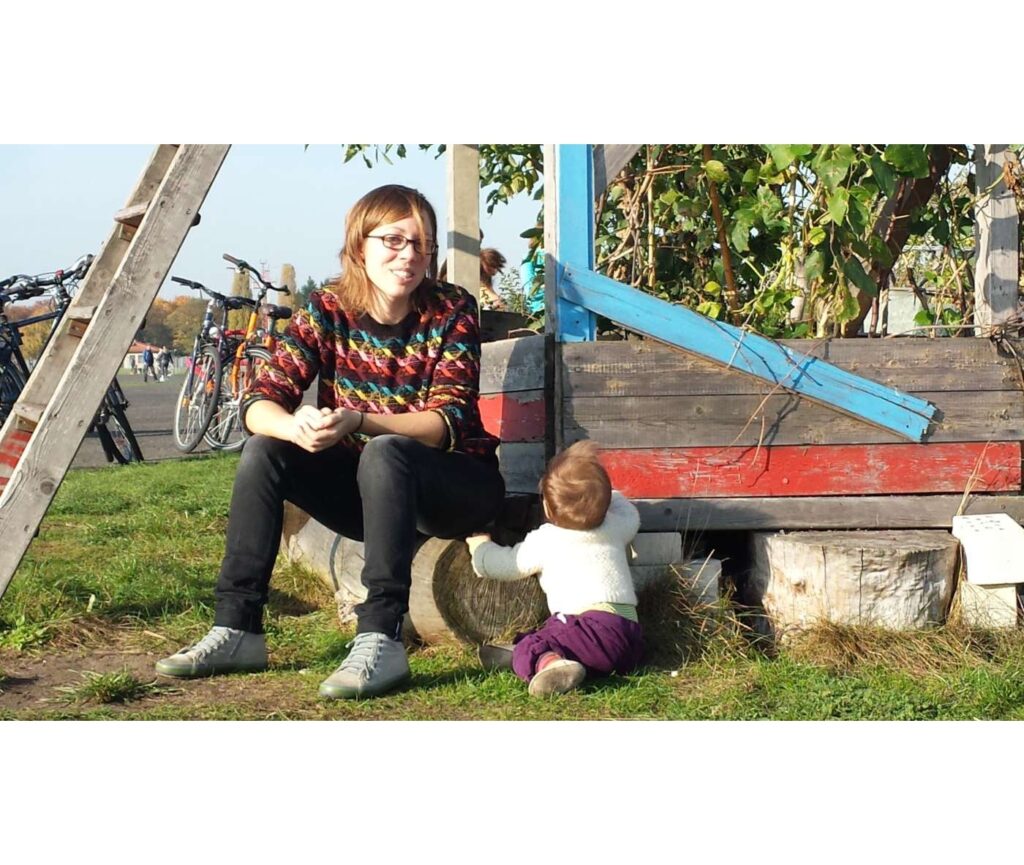
Milla didn’t bring a perfect family life. Instead, it brought everyday life. Nappies. Sleep deprivation. Hospital food. Mountains of laundry. The neonatal unit. Feeling overwhelmed. Happiness. Arguments. Responsibility. Gianni moved into my small flat with us at first. We lived amidst baby bottles, trips to the theatre, chaos and the sound of the vacuum cleaner. Later, we travelled together through Italy, France and Taiwan. With a pushchair, sleep deprivation and far too much luggage. Milla grew up amidst different flats, languages and people. And at some point we realised: what mattered was never how our family looked to the outside world. But whether it worked.
Family is flexible
Over the years, our family grew larger, more complicated and more ordinary all at once. New partners joined us. New homes. New conflicts. Later, a shared custody arrangement. Weeks with Mum. Weeks with Dad. Sometimes loud. Sometimes quiet. Sometimes chaotic. Sometimes structured. Not always easy. But full of life.
Family, we learnt, is not a finished picture. Not a rigid concept. Not a template. Family changes. It grows. Sometimes it fails. It reorganises itself. And sometimes that works better than anything that was originally planned.
Why Familyship was created
Familyship never started out as a business idea. It began with an experience. It stemmed from the realisation that there are many people who want a family — but don’t fit into traditional models.
- People who want to have children but do not have a suitable partner.
- Queer families.
- Co-parents.
- Single mothers.
- Blended families.
People who want to take responsibility, even if their lives don’t look like something out of an advert.
When we first started out, there was hardly any language to describe it, hardly any role models and hardly any spaces for it. That’s why Familyship came into being. Not as the perfect answer. But as a place for people who are searching for their own path to family. And perhaps that is precisely the most honest definition of family today: not the form. But the decision to take responsibility for one another.